These 7 Facts About Stroke Could Change Your Life
Are you at risk of Stroke?
Yes, you may be.
What is Stroke?
Perhaps, this question may have crossed your mind but not much attention was given. But, what is stroke to begin with? Stroke indicates a sudden brain attack that can happen to anyone at any time. It occurs when the blood flow in brain is cut off, resulting in oxygen deprivation of brain cells. Eventually, an individual faces lost of abilities controlled by that area of brain, such as memory and muscle control.
The severity of stroke depends on how much the brain is damaged. Small stroke attack may only cause minor problems such as temporary weakness of an arm or leg. As for larger stroke, that one may become paralyzed permanently on one side of the body or lose the ability to speak. Some may recover completely from stroke; unfortunately, more than ⅔ of stroke survivors will have some type of disability for the rest of their lifetime.1
Stroke can be classified into two types: hemorrhagic stroke and ischemic stroke.
What You Should Know About Stroke?
1. It attacks without any prior symptoms
There is no symptom before a stroke attacks. The sudden onset is generally recognised by sudden numbness or weakness of the face, arm or leg (especially one side of the body); confusion, troubled speech or understanding speech; trouble eyesight on one or both eyes; difficulty in walking, dizziness, loss of balance or coordination; or sudden severe headache with no pertaining reason.
2. Early detection reduces the damage to brain
Every minute counts when stroke strikes! If stroke is left untreated for too long, the damage to the brain will worsen and be irreversible. Comparing with the normal rate of neuron loss in brain aging, the ischemic brain ages 3.6 years each hour without treatment.17 Do the FAST test if suspect of stroke.
At the hospital, the patient will be requested to undergo several assessments, including brain imaging scan (eg: CT scan, MRI), full neurological and cardiovascular assessment, and blood tests* to diagnose and rule out other disease with symptoms that could mimic stroke. Once stroke is diagnosed, supportive treatment will be given to stabilize the blood pressure and cardiac rhythm. For ischemic event, thrombolytic therapy** is given within the first 3 hours of onset. As for hemorrhagic event, the patient is often seen with rapid loss of consciousness, hence the medical team will maintain the patient’s airway and reduce the elevated intracranial pressure caused by bleeding in the brain.
*Low blood glucose level may cause symptoms similar to those of a stroke
**Prescription of drug to dissolve blood clots that caused blockage
3. Some people possess higher risk for stroke
High blood pressure is known to be the major risk factor for stroke.3,8,19 People with increasing age, high cholesterol, cardiovascular disease, family history of stroke, smokers (including second hand smokers) and alcohol use are found to be at higher risk.3,8 Stroke survivor also need to beware of another stroke attack. The cumulative risk of stroke recurrence is 3.1% at 30 days; 11.1% at 1 year; 26.4% at 5 years; and 39.2% at 10 years after the initial stroke attack.11
4. Stroke is growing to be common
Although stroke affect people of all ages, it is more commonly seen among elderly. Stroke is the second leading cause of death worldwide in 2010 (consists of 11.1% i.e. 5.8 millions death) and shows an increasing prevalence.4 In Malaysia, stroke is one of the top five leading causes of death, ranging from 6.6-8.4% of death in general hospitals since 2005, with the mean age between 54.5-62.6 years.29 Furthermore, in 2007, it has been reported that six new stroke cases occur in every hour.30 Stroke is Singapore’s fourth leading cause of death.31 The average number of stroke episodes from 2005 to 2013 was approximately 5,868 a year, with most of the cases occurred among age group 40 and above. 30
5. Stroke recovery is a lifelong process
Stroke recovery begins after the patient’s condition has stabilized (blood flow to brain is restored and elevated pressure in the surrounding area is reduced). The sooner the recovery begin, the higher chance one has to regain from their affected brain and body function. Stroke results in significant impairment towards one’s language, cognition, motor, and/or sensory skills, and may also causes complications such as impaired bladder and bowel control, difficulty in swallowing, and depression. Hence, stroke survivors need lengthy time for rehabilitation and chronic care in improving the impairments and managing the complications, which doesn’t just happens for the first few months after a stroke attack. It requires patience, hard work and commitment from both caregiver and patient, and may take years to recover (depending on the severity of stroke). Generally, the recovery involve high-intensity training, repetitive-task training and fitness training. It can take place at either rehabilitation units, skilled nursing homes or even your home, if you can get the specialist coming over to help.
6. A mini-stroke should be treated as medical emergency
Mini stroke, which known as transient ischemic attack (TIA), is a temporary stroke symptom that last less than 24 hours. However, it is a major warning signs prior to actual stroke, with the recurrence rate of 10-20% within 90 days.10 Thus, individual who have experienced TIA needs immediate medical assessment and diagnosis. As proposed by its name, most cases of TIA involves ischemic events.
7. Stroke is preventable
Yes! Up to 80% of stroke cases can actually be prevented1 through managing the controllable risk factor (eg: high blood pressure, high cholesterol). Besides, practicing a healthy lifestyle is always the best preventive method:
- Exercise regularly – physical activity helps in managing the risk factors of stroke, especially in improving blood pressure and cholesterol levels; and this has been supported by various studies reporting that moderately active individuals had 20% lower risk and highly active individuals had 27% lower risk of stroke incidence or mortality than the low-active individuals.7
- Eat healthy and a balanced diet – an overall healthy eating pattern which involves consumption of a variety of fruits and vegetables; reduced intake of saturated fats, cholesterol, trans fat by substituting with fish, legumes and nuts; limit salt intake to less than 6 g/day by reducing intake of high salt-content food such as processed food, canned food; and reduce usage of salt in cooking (high salt intake is associated with significantly increased risk of stroke).20
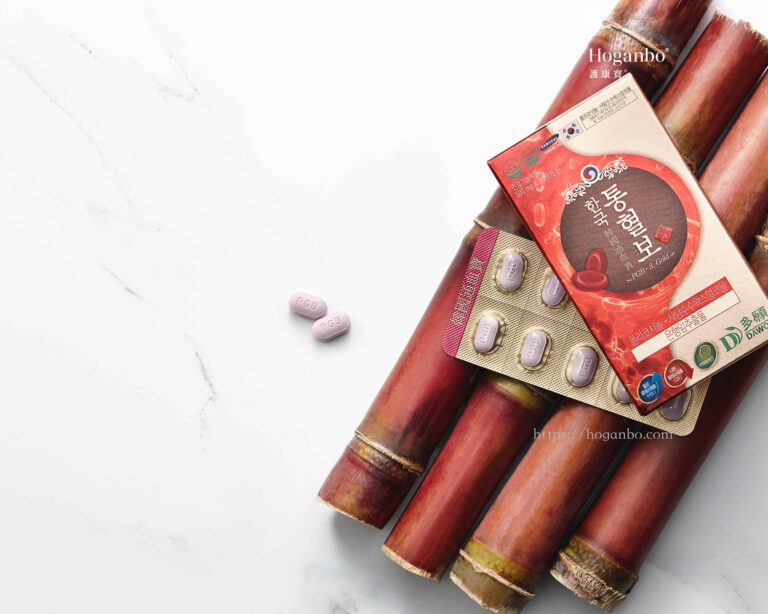
- Consume natural supplement with premium quality and scientifically proven health benefit(s) – Hoganbo PGB-3: helps by managing cholesterol levels (one of the risk factors for stroke) with its main ingredient – Policosanol, an extraction from Cuba sugar cane wax.21-23 Furthermore, it also contain extraction of Ginkgo leaves and Banaba leaves which helps in improving blood circulation, strengthening the weakened blood vessels,24 and enhances memory.25
Time is Brain
A frequently used phrase in stroke incidence is “time is brain” which emphasizes on human nervous tissue that is rapidly at lost as stroke progresses, thus requiring emergent evaluation and therapy.17 We should recognise the signs of stroke so that we can take immediate action to reduce its damage to the brain. However, as prevention is always better than cure, active preventive actions should be taken before stroke gets you.
Don’t let stroke take away health from you and your loved ones! Starts managing your cholesterol and blood pressure today with Hoganbo.
Love what you read so far? Share this with your friends and family and subscribe to Hoganbo newsletter to stay up-to-date.
Call us at +6017-373-7685 to learn more about Hoganbo HD-1. We are on WhatsApp, iMessage and WeChat.